
South Bend, IN · Machine Lapping

Machine Lapping in South Bend

Machine lapping runs planetary, single-side, and CNC platforms with controlled pressure and abrasive flow. Designed for lot-to-lot consistency in finish and flatness.

≤ 1 Light Band < 2 µin Ra ISO 9001:2015 1-Day Quote
Direct line: (618) 323-0428
Request For Quote

Send drawings. Receive tolerances.

One business day turnaround on South Bend machine lapping requests.
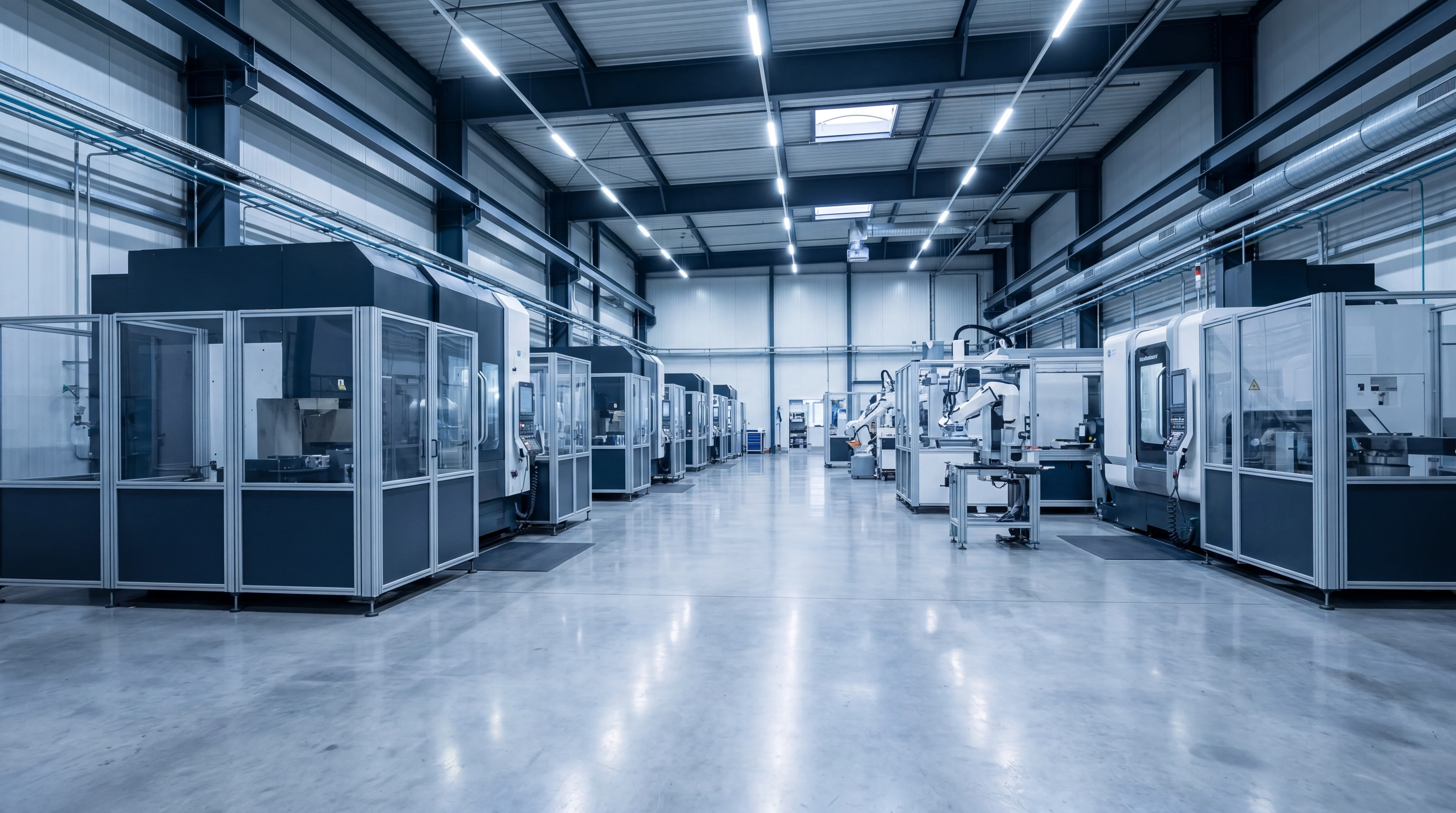
Machine Lapping reference

Machine lapping runs planetary, single-side, and CNC platforms with controlled pressure and abrasive flow. Designed for lot-to-lot consistency in finish and flatness.

Process Overview

Machine Lapping for South Bend-area programs is performed under documented process cards. Each lot is recorded with abrasive type and grit, plate selection, pressure profile, and inspection method so a follow-up lot reproduces the same flatness, parallelism, and Ra. Drawings, target finish, and lot size determine the equipment and the sequence; quotes cover all three together.

Single-Side Lapping Machine

Single-Side Lapping Machine is selected based on part size, materials, and target finish. Setup is recorded in the per-lot travel sheet so subsequent lots reproduce the same conditions.

Double-Side Lapping Machine

Double-Side Lapping Machine is selected based on part size, materials, and target finish. Setup is recorded in the per-lot travel sheet so subsequent lots reproduce the same conditions.

Flat Lapping Machine

Flat Lapping Machine is selected based on part size, materials, and target finish. Setup is recorded in the per-lot travel sheet so subsequent lots reproduce the same conditions.

Cylindrical Lapping Machine

Cylindrical Lapping Machine is selected based on part size, materials, and target finish. Setup is recorded in the per-lot travel sheet so subsequent lots reproduce the same conditions.

CNC / Automated Lapping Machine

CNC / Automated Lapping Machine is selected based on part size, materials, and target finish. Setup is recorded in the per-lot travel sheet so subsequent lots reproduce the same conditions.

Lapping Machine Types

Lapping Machine Types is performed under documented process controls aligned with the part geometry, target finish, and lot size. Tolerances, abrasive selection, and plate type are matched to the substrate — cast iron with diamond for hard materials, composite for finer Ra targets, and grooved or serrated plates for chip clearing in higher-removal passes.

  • Single-side lapping machine — open-face plate, single rotating lap for cost-effective single-face finishing
  • Double-side lapping machine — planetary carriers between upper and lower laps for parallel two-face finishing
  • Flat lapping machine — for plates, seals, and flat-faced workpieces
  • Cylindrical lapping machine — internal, external, and centerless configurations for shafts, bores, and pins
  • CNC / automated lapping machine — programmable pressure, speed, and cycle control for repeatable production runs

Additional Equipment and Variants

Other configurations available for machine lapping — expand any item below for selection notes.

Pressure Jet Lapping Machine

Pressure Jet Lapping Machine is selected when part size, materials, or surface finish targets call for that specific platform. Setup is recorded on the per-lot travel sheet so subsequent lots reproduce the same conditions.

Bench-Mounted Lapping Machine

Bench-Mounted Lapping Machine is selected when part size, materials, or surface finish targets call for that specific platform. Setup is recorded on the per-lot travel sheet so subsequent lots reproduce the same conditions.

Free-Standing Lapping Machine

Free-Standing Lapping Machine is selected when part size, materials, or surface finish targets call for that specific platform. Setup is recorded on the per-lot travel sheet so subsequent lots reproduce the same conditions.

Materials and Tolerances

Common materials for machine lapping include hardened tool steels, stainless alloys, tungsten carbide, ceramics (Al₂O₃, ZrO₂, SiC), single-crystal silicon, sapphire, and carbon-graphite seal faces. Flatness targets of one light band (~11.6 µin / 0.3 µm) are routine; sub-micron parallelism is held on planetary fixtures with matched carriers.

Inspection and Certification

In-process inspection uses interferometer plates for flatness, profilometers for Ra, and gauge blocks or air gauges for dimensional checks. Per-lot certification is issued on production runs and ties measured results back to the originating drawing and travel sheet.

Service Detail

In-Depth Reference for South Bend

DOC REF: TCS-SVC-LOC

Machine Lapping Demand Across the South Bend Industrial Corridor

South Bend anchors the northern end of Indiana's manufacturing belt, where automotive supply chains, defense production, and precision component fabrication share a dense industrial geography across St. Joseph County and the adjacent Mishawaka submarket. Tier 1 and Tier 2 automotive suppliers concentrated along the US-31 and US-20 corridors produce valve bodies, transmission housings, and hydraulic control manifolds whose mating surfaces must meet lapped flatness specifications to sustain leak-free seals under operating pressures that standard grinding tolerances cannot reliably achieve. Dimensional variation at hydraulic mating interfaces translates into leakage, pressure drop, and warranty exposure within OEM supply chains - conditions that sustain consistent lapping demand across the corridor's fluid power and powertrain supplier base.

AM General's assembly complex in Mishawaka builds military light tactical vehicles with hydraulic actuation and antilock braking subsystems incorporating precision-lapped valve spools, ported blocks, and seal seats. Components flowing from South Bend-area suppliers into those assembly lines face military performance specifications where surface geometry tolerances at fluid interfaces are not interchangeable with commercial-grade finishing. Ignition Park - the redeveloped former Studebaker and Bendix manufacturing campus on the city's west side - now houses precision fabrication shops, applied materials R&D tenants, and fluid control engineering programs, each of which generates recurring lapping requirements on tooling and reference artifacts. The Bendix Corporation's decades-long manufacturing presence in South Bend seeded the regional workforce and supply base with precision surface finishing expertise; Knorr-Bremse successor operations and independent spinoffs across Michiana continue to draw on that local capability. The University of Notre Dame Research Park on the city's north side maintains instrumentation laboratories and materials characterization programs where optical flats, reference laps, and gauge artifacts require periodic surface restoration to preserve calibration traceability - a demand that arises on fixed calibration cycles rather than production volume, independent of the manufacturing sectors described above.

Standards and Traceability Requirements for Machine Lapping

Machine lapping performed in support of calibrated measurement systems is governed by interlocking standards addressing surface geometry, measurement method, and the traceability architecture connecting both to national measurement institutes. Flatness of lapped surfaces is quantified in helium light bands - one band equaling approximately 0.3 micrometers, or roughly 0.000012 inch - through optical flat interferometry. Instruments performing that verification must carry NIST-traceable calibration certificates linking each measurement result back to length standards maintained at the National Institute of Standards and Technology. Under ISO/IEC 17025 accreditation, laboratories document these traceability chains for every reference artifact whose lapped surface participates in a measurement interface, including gauge block wringing faces, surface plate reference planes, and optical flat contact surfaces - the surface condition is a required parameter in the traceability record, not background information.

Surface plates are graded under ASME B89.3.7 (Granite Surface Plates) or the legacy Federal Specification GGG-F-325, with acceptance grades of Grade A Laboratory, Grade B Inspection, and Grade C Tool Room establishing flatness tolerances scaled to working surface dimensions. A 24 x 36 inch Grade A plate carries a flatness tolerance of approximately 0.00018 inch across its longest diagonal; machine lapping to restore a worn plate to that grade requires continuous interferometric verification throughout the lapping cycle, not a single post-operation check. ISO 3650 governs gauge block flatness and parallelism in parallel, specifying tolerances from 0.05 micrometers for Grade K calibration blocks to 0.30 micrometers for Grade 2 inspection blocks. Restoring wringing face geometry to those values re-establishes the dimensional traceability that ISO/IEC 17025 measurement chains require before gauge blocks can be returned to service as reference standards.

ASTM E18 (Standard Test Methods for Rockwell Hardness of Metallic Materials) and ASTM E10 (Standard Test Method for Brinell Hardness of Metallic Materials) each specify surface condition requirements for hardness tester anvils and test specimens. Hardness testing equipment rebuilt or recertified for reintroduction into South Bend-area manufacturing facilities must have anvil surfaces verified against those specifications before the instrument re-enters a calibrated measurement system. The ISO/IEC 17025 requirement that all sources of measurement uncertainty be identified and quantified assigns direct practical weight to each of these surface specifications: a lapped surface contributing to any measurement interface carries a documented, current flatness value as a required term in the uncertainty budget where that surface appears. The nominal grade specification from original manufacture is not an acceptable substitute for a measured value within an accredited calibration program.

Request a Machine Lapping Quote Call (618) 323-0428