
Machine Lapping in Illinois
Machine lapping runs planetary, single-side, and CNC platforms with controlled pressure and abrasive flow. Designed for lot-to-lot consistency in finish and flatness.
Send drawings. Receive tolerances.
One business day turnaround on Illinois machine lapping requests.
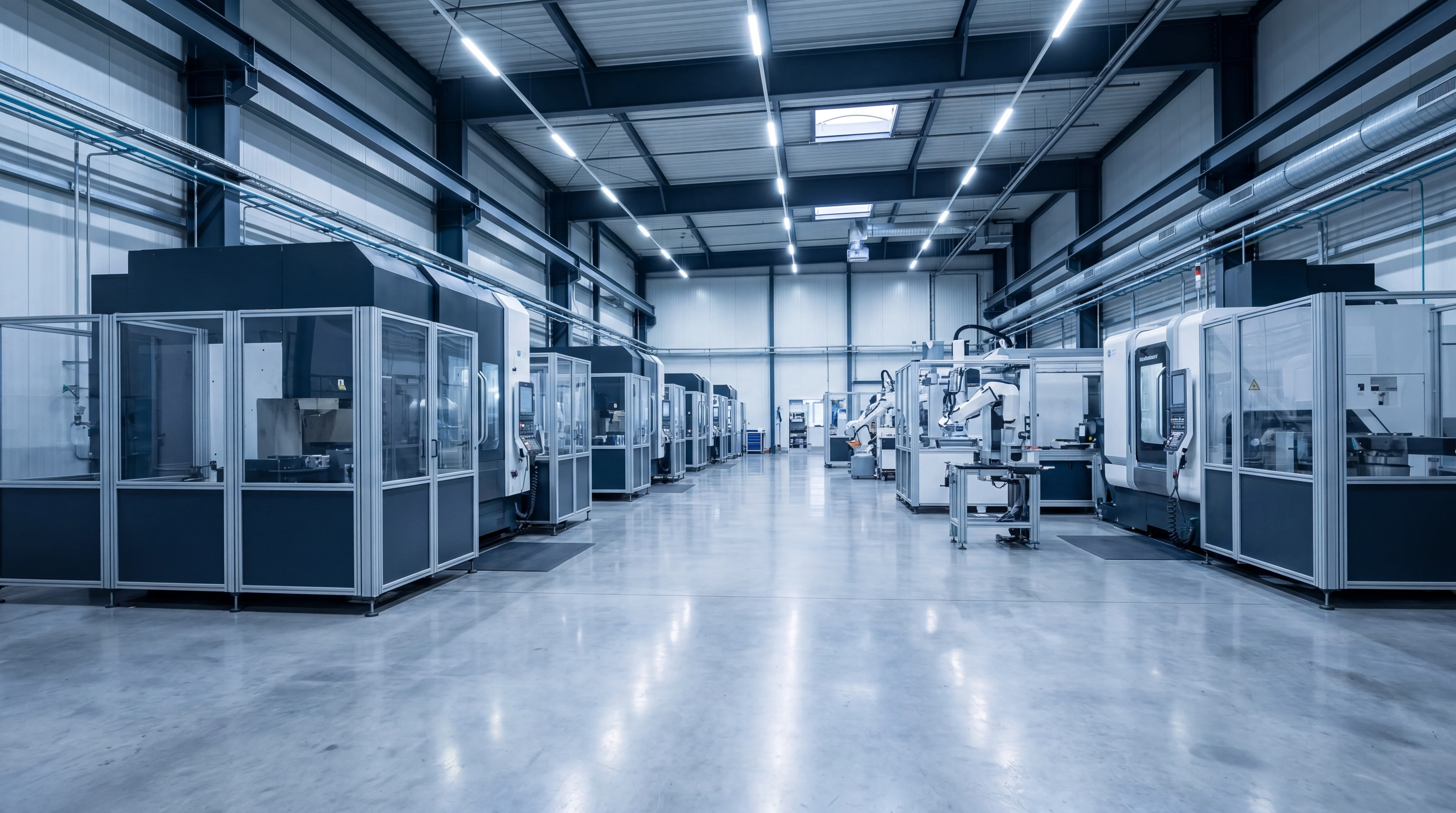
Machine lapping runs planetary, single-side, and CNC platforms with controlled pressure and abrasive flow. Designed for lot-to-lot consistency in finish and flatness.
Process Overview
Machine Lapping for Illinois-area programs is performed under documented process cards. Each lot is recorded with abrasive type and grit, plate selection, pressure profile, and inspection method so a follow-up lot reproduces the same flatness, parallelism, and Ra. Drawings, target finish, and lot size determine the equipment and the sequence; quotes cover all three together.
Single-Side Lapping Machine
Single-Side Lapping Machine is selected based on part size, materials, and target finish. Setup is recorded in the per-lot travel sheet so subsequent lots reproduce the same conditions.
Double-Side Lapping Machine
Double-Side Lapping Machine is selected based on part size, materials, and target finish. Setup is recorded in the per-lot travel sheet so subsequent lots reproduce the same conditions.
Flat Lapping Machine
Flat Lapping Machine is selected based on part size, materials, and target finish. Setup is recorded in the per-lot travel sheet so subsequent lots reproduce the same conditions.
Cylindrical Lapping Machine
Cylindrical Lapping Machine is selected based on part size, materials, and target finish. Setup is recorded in the per-lot travel sheet so subsequent lots reproduce the same conditions.
CNC / Automated Lapping Machine
CNC / Automated Lapping Machine is selected based on part size, materials, and target finish. Setup is recorded in the per-lot travel sheet so subsequent lots reproduce the same conditions.
Lapping Machine Types
Lapping Machine Types is performed under documented process controls aligned with the part geometry, target finish, and lot size. Tolerances, abrasive selection, and plate type are matched to the substrate — cast iron with diamond for hard materials, composite for finer Ra targets, and grooved or serrated plates for chip clearing in higher-removal passes.
- Single-side lapping machine — open-face plate, single rotating lap for cost-effective single-face finishing
- Double-side lapping machine — planetary carriers between upper and lower laps for parallel two-face finishing
- Flat lapping machine — for plates, seals, and flat-faced workpieces
- Cylindrical lapping machine — internal, external, and centerless configurations for shafts, bores, and pins
- CNC / automated lapping machine — programmable pressure, speed, and cycle control for repeatable production runs
Additional Equipment and Variants
Other configurations available for machine lapping — expand any item below for selection notes.
Pressure Jet Lapping Machine
Pressure Jet Lapping Machine is selected when part size, materials, or surface finish targets call for that specific platform. Setup is recorded on the per-lot travel sheet so subsequent lots reproduce the same conditions.
Bench-Mounted Lapping Machine
Bench-Mounted Lapping Machine is selected when part size, materials, or surface finish targets call for that specific platform. Setup is recorded on the per-lot travel sheet so subsequent lots reproduce the same conditions.
Free-Standing Lapping Machine
Free-Standing Lapping Machine is selected when part size, materials, or surface finish targets call for that specific platform. Setup is recorded on the per-lot travel sheet so subsequent lots reproduce the same conditions.
Materials and Tolerances
Common materials for machine lapping include hardened tool steels, stainless alloys, tungsten carbide, ceramics (Al₂O₃, ZrO₂, SiC), single-crystal silicon, sapphire, and carbon-graphite seal faces. Flatness targets of one light band (~11.6 µin / 0.3 µm) are routine; sub-micron parallelism is held on planetary fixtures with matched carriers.
Inspection and Certification
In-process inspection uses interferometer plates for flatness, profilometers for Ra, and gauge blocks or air gauges for dimensional checks. Per-lot certification is issued on production runs and ties measured results back to the originating drawing and travel sheet.
In-Depth Reference for Illinois
Illinois Manufacturing Demand for Machine Lapping
Northeastern Illinois concentrates an unusual density of precision fluid-power and heavy-equipment suppliers along two overlapping corridors: the Elk Grove Village industrial park - one of the largest contiguous business parks in North America - and the I-88 Research and Technology Corridor running through Naperville, Warrenville, and Aurora. Both zones contain tier-1 and tier-2 manufacturers producing hydraulic valves, gear pumps, directional-control valves, and actuator assemblies where mating surfaces require flatness tolerances measured in millionths of an inch. Caterpillar's global headquarters and component-level operations in the Peoria metro add a second major node; hydraulic piston-pump bodies and valve spool bores returned for dimensional restoration or maintenance lapping represent a recurring workload drawn directly from that supply chain, where downtime costs make fast-turn precision finishing economically significant.
Beyond those two hubs, Illinois generates machine lapping demand from several additional industrial clusters. Rockford's precision fastener, cutting-tool, and aerospace-grade machined-component sector produces gauge blocks, reference flats, and tooling fixtures that require lapping as the final dimensionally deterministic finishing step. In Lake County, Abbott Laboratories and Baxter International maintain fluid-handling equipment facilities where sealing faces and valve seats in bioprocessing hardware carry surface-finish specifications tight enough that lapping is the method of record, not a secondary option. Argonne National Laboratory in Lemont and Fermi National Accelerator Laboratory in Batavia periodically require lapped surfaces on vacuum-system components and precision beam-line instrumentation fixtures, where surface conformance directly affects measurement validity. Will County's automotive and off-highway tier suppliers - concentrated in the Channahon and Romeoville industrial corridors - generate cylinder-head, fuel-injection, and transmission-component surface work where lapped flatness is confirmed by leak-down or dimensional audit.
Standards and Traceability Requirements for Machine Lapping
Calibration-laboratory lapping is governed by ISO/IEC 17025, the international framework for testing and calibration laboratory competence. Accreditation under that framework requires that all reference artifacts used to verify lapped surfaces - optical flats, surface plates, and master gauge blocks - carry documented NIST-traceable calibration histories with stated measurement uncertainty at defined confidence intervals. Surface plates used as reference datums are classified to Federal Specification GGG-P-463c Grade A or Grade B; the flatness tolerance bands for each grade are narrow enough that any corrective lapping performed on the plate itself must be followed by repeat calibration against an independent NIST-traceable reference flat before that surface plate re-enters service.
Surface texture verification after lapping is performed against ASME B46.1 criteria for Ra (arithmetic average roughness) and Rz (mean roughness depth), with the contact profilometer used for measurement carrying its own periodic calibration traceable to NIST artifact standards. ASTM procedural frameworks complement ISO/IEC 17025 documentation requirements in Illinois facilities where material certification must accompany dimensional records - hardness verification per ASTM E18 (Rockwell) and ASTM E92 (Vickers) conventions, for instance, feeds directly into lapping parameter selection for ferrous and non-ferrous substrates. For pharmaceutical fluid-handling components - a category relevant to Lake County's bioprocessing equipment manufacturers - FDA 21 CFR Part 211 equipment-qualification requirements mean that surface-finish acceptance values documented during lapping form part of the Installation Qualification package that facilities retain for regulatory inspection.
Tolerance grades for lapped surfaces follow ISO 286 fits-and-tolerances conventions in most current industrial specifications, though active aerospace and defense programs drawing on Illinois' stateline-area suppliers may still reference inch-based tolerances per legacy ANSI standards. The acceptance band assigned to any given surface depends on its functional role - a reference flat used as a measurement datum carries different flatness requirements than a valve seating surface, and both differ from the finish grade required on a lapping plate that will itself serve as a reference artifact. Regardless of the dimensional system in use, all instruments applied to accept or reject a lapped surface must carry current, documented calibration traceable to national measurement standards, a condition that ISO/IEC 17025 accreditation provides the formal basis to demonstrate in supply-chain qualification reviews and regulatory audits.