
Machine Lapping in Milwaukee
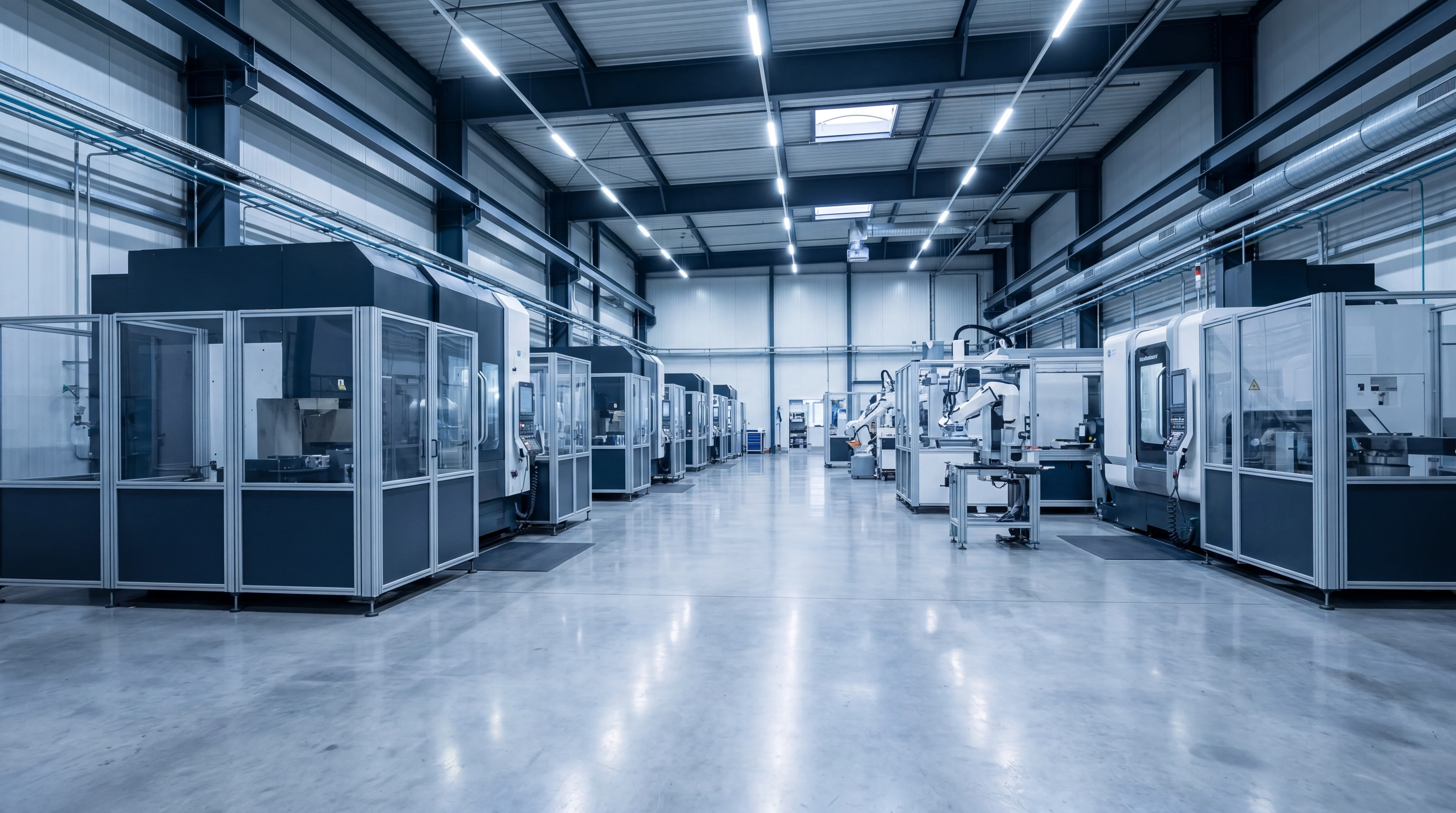
Machine lapping runs planetary, single-side, and CNC platforms with controlled pressure and abrasive flow. Designed for lot-to-lot consistency in finish and flatness.
Send drawings. Receive tolerances.
One business day turnaround on Milwaukee machine lapping requests.
Machine lapping runs planetary, single-side, and CNC platforms with controlled pressure and abrasive flow. Designed for lot-to-lot consistency in finish and flatness.
Process Overview
Machine Lapping for Milwaukee-area programs is performed under documented process cards. Each lot is recorded with abrasive type and grit, plate selection, pressure profile, and inspection method so a follow-up lot reproduces the same flatness, parallelism, and Ra. Drawings, target finish, and lot size determine the equipment and the sequence; quotes cover all three together.
Single-Side Lapping Machine
Single-Side Lapping Machine is selected based on part size, materials, and target finish. Setup is recorded in the per-lot travel sheet so subsequent lots reproduce the same conditions.
Double-Side Lapping Machine
Double-Side Lapping Machine is selected based on part size, materials, and target finish. Setup is recorded in the per-lot travel sheet so subsequent lots reproduce the same conditions.
Flat Lapping Machine
Flat Lapping Machine is selected based on part size, materials, and target finish. Setup is recorded in the per-lot travel sheet so subsequent lots reproduce the same conditions.
Cylindrical Lapping Machine
Cylindrical Lapping Machine is selected based on part size, materials, and target finish. Setup is recorded in the per-lot travel sheet so subsequent lots reproduce the same conditions.
CNC / Automated Lapping Machine
CNC / Automated Lapping Machine is selected based on part size, materials, and target finish. Setup is recorded in the per-lot travel sheet so subsequent lots reproduce the same conditions.
Lapping Machine Types
Lapping Machine Types is performed under documented process controls aligned with the part geometry, target finish, and lot size. Tolerances, abrasive selection, and plate type are matched to the substrate — cast iron with diamond for hard materials, composite for finer Ra targets, and grooved or serrated plates for chip clearing in higher-removal passes.
- Single-side lapping machine — open-face plate, single rotating lap for cost-effective single-face finishing
- Double-side lapping machine — planetary carriers between upper and lower laps for parallel two-face finishing
- Flat lapping machine — for plates, seals, and flat-faced workpieces
- Cylindrical lapping machine — internal, external, and centerless configurations for shafts, bores, and pins
- CNC / automated lapping machine — programmable pressure, speed, and cycle control for repeatable production runs
Additional Equipment and Variants
Other configurations available for machine lapping — expand any item below for selection notes.
Pressure Jet Lapping Machine
Pressure Jet Lapping Machine is selected when part size, materials, or surface finish targets call for that specific platform. Setup is recorded on the per-lot travel sheet so subsequent lots reproduce the same conditions.
Bench-Mounted Lapping Machine
Bench-Mounted Lapping Machine is selected when part size, materials, or surface finish targets call for that specific platform. Setup is recorded on the per-lot travel sheet so subsequent lots reproduce the same conditions.
Free-Standing Lapping Machine
Free-Standing Lapping Machine is selected when part size, materials, or surface finish targets call for that specific platform. Setup is recorded on the per-lot travel sheet so subsequent lots reproduce the same conditions.
Materials and Tolerances
Common materials for machine lapping include hardened tool steels, stainless alloys, tungsten carbide, ceramics (Al₂O₃, ZrO₂, SiC), single-crystal silicon, sapphire, and carbon-graphite seal faces. Flatness targets of one light band (~11.6 µin / 0.3 µm) are routine; sub-micron parallelism is held on planetary fixtures with matched carriers.
Inspection and Certification
In-process inspection uses interferometer plates for flatness, profilometers for Ra, and gauge blocks or air gauges for dimensional checks. Per-lot certification is issued on production runs and ties measured results back to the originating drawing and travel sheet.
In-Depth Reference for Milwaukee
Milwaukee's Manufacturing Base and Demand for Machine Lapping
Milwaukee County and neighboring Waukesha County form one of the Great Lakes region's densest concentrations of precision metalworking, fluid power, and drive-component manufacturing. The Menomonee Valley corridor - Milwaukee's industrial spine running west along the Menomonee River through the near-west side - continues to house gear manufacturers, metal fabricators, and mechanical-component suppliers whose finished outputs carry tight surface geometry requirements on mating, sealing, and bearing faces. Rexnord Corporation, headquartered in Milwaukee and producing couplings, gear drives, and water management equipment, depends on lapped mating faces for dimensional conformance on gearbox housings and coupling flanges. Husco International's Waukesha facility manufactures hydraulic and electrohydraulic controls for off-highway and agricultural equipment; its valve body sealing surfaces carry parallelism specifications in the single-digit micrometer range that flat lapping processes are designed to achieve. The I-94 corridor from Milwaukee through Waukesha and Brookfield carries a concentrated band of fluid power, motion control, and precision machine builders whose component specifications routinely call out lapped surfaces as the final geometric-correction step before assembly.
The Milwaukee metro's Tier 1 and Tier 2 supplier network broadens the demand profile across multiple end-use sectors. Harley-Davidson's powertrain operations in Menomonee Falls document flatness requirements on engine case mating planes and cylinder base surfaces where grinding operations cannot reliably hold the specified tolerance envelope, making controlled lapping the practical process option. GE HealthCare, headquartered in Wauwatosa, connects the region to the medical imaging supply chain, where interface-plane flatness on precision housings and gradient assemblies is held to sub-micron requirements. Across the Oak Creek and Franklin industrial parks south of the city, contract manufacturers supplying automotive, defense, and instrumentation OEMs carry identical surface geometry requirements at the part level. This combination of heavy-industry heritage in the Menomonee Valley, fluid power concentration in Waukesha County, and medical device manufacturing in the western suburbs establishes Milwaukee as a high-density demand zone for machine lapping services within a compact geographic footprint.
Technical Standards and Traceability Requirements for Machine Lapping
Machine lapping produces flatness, parallelism, and surface finish results that must be measured against traceable references and documented before acceptance in regulated manufacturing applications. Surface texture is characterized per ASME B46.1, which governs surface texture terminology and measurement methods in North American manufacturing practice, specifying arithmetic mean roughness (Ra) and profile parameters used in acceptance inspection. Geometric tolerances are drawn from ASME Y14.5 or the internationally equivalent ISO 1101, with flatness and parallelism conformance verified against datum references whose calibration history traces back to NIST length standards. For hydraulic sealing surfaces, acceptance windows commonly fall between 0.5 and 2.0 micrometers of flatness deviation across the functional face, measured interferometrically or with calibrated contact profilometers operating within verified uncertainty budgets. ASTM material and measurement standards may also govern incoming stock or process verification depending on the applicable customer quality plan and material specification.
ISO/IEC 17025 accreditation governs the measurement laboratory verifying lapped-surface conformance, requiring documented uncertainty budgets that account for instrument resolution, thermal expansion coefficients, probe calibration state, and part-surface condition. NIST traceability chains run from shop-floor optical flats, surface plates, and gauge blocks back through transfer standards to national length realization, with calibration intervals and uncertainty statements maintained within the quality management system. Where Milwaukee-area facilities subject to FDA 21 CFR Part 211 - pharmaceutical manufacturing operations and bioprocessing sites in the metro corridor - require lapped gasket or valve surfaces as part of process equipment, measurement records must satisfy equipment qualification documentation requirements in addition to dimensional acceptance criteria. Facilities operating under IATF 16949 or AS9100 quality management systems face contractual traceability requirements at the supplier level, converting lapping process records and calibration certificates from discretionary quality documentation into auditable deliverables. The intersection of NIST-traceable measurement, ISO/IEC 17025 laboratory qualification, and customer-specific geometric tolerance specifications defines the compliance structure within which machine lapping verification operates across Milwaukee's regulated manufacturing base.