
Indianapolis, IN · Machine Lapping

Machine Lapping in Indianapolis

Machine lapping runs planetary, single-side, and CNC platforms with controlled pressure and abrasive flow. Designed for lot-to-lot consistency in finish and flatness.

≤ 1 Light Band < 2 µin Ra ISO 9001:2015 1-Day Quote
Direct line: (618) 323-0428
Request For Quote

Send drawings. Receive tolerances.

One business day turnaround on Indianapolis machine lapping requests.
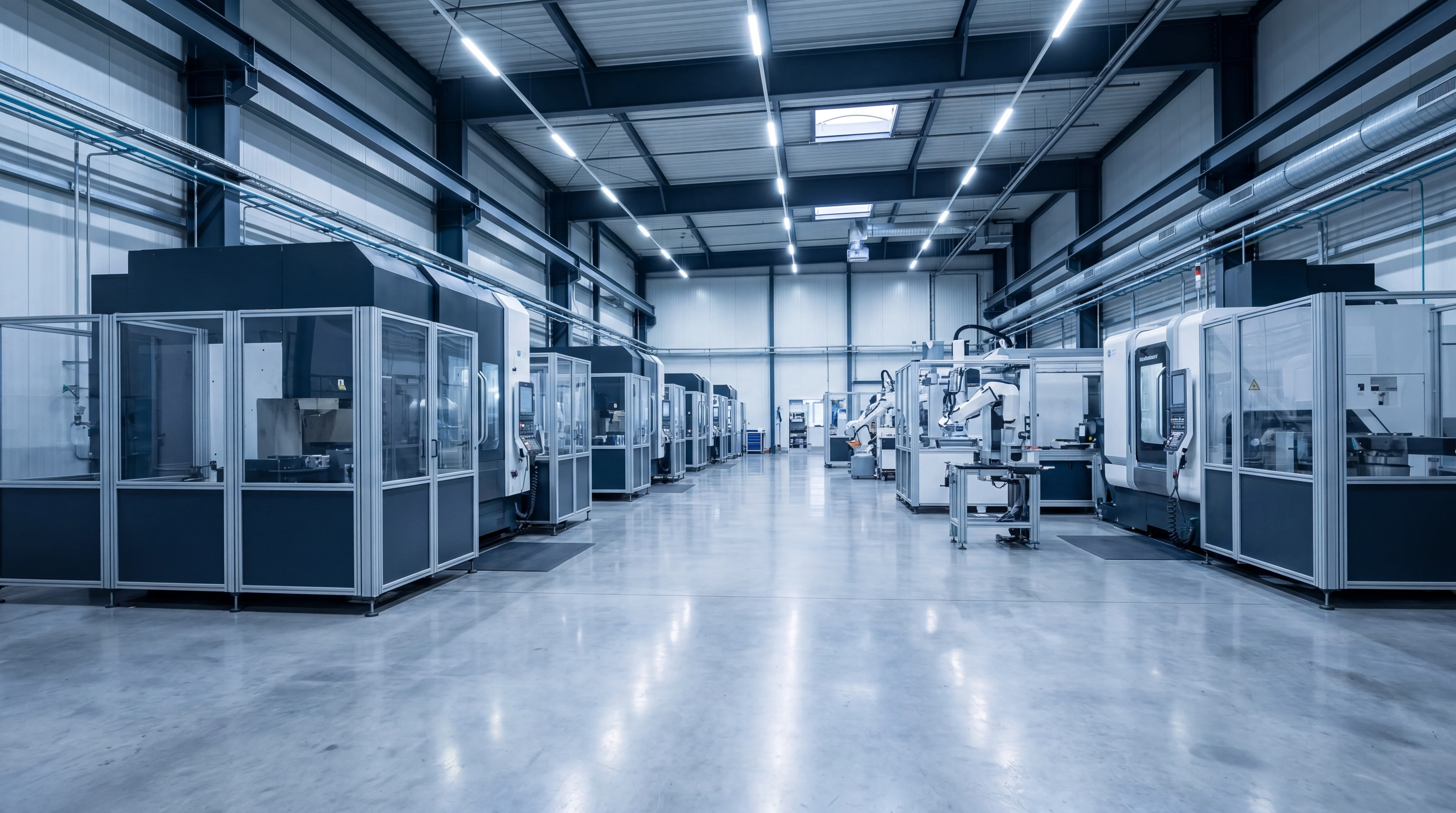
Machine Lapping reference

Machine lapping runs planetary, single-side, and CNC platforms with controlled pressure and abrasive flow. Designed for lot-to-lot consistency in finish and flatness.

Process Overview

Machine Lapping for Indianapolis-area programs is performed under documented process cards. Each lot is recorded with abrasive type and grit, plate selection, pressure profile, and inspection method so a follow-up lot reproduces the same flatness, parallelism, and Ra. Drawings, target finish, and lot size determine the equipment and the sequence; quotes cover all three together.

Single-Side Lapping Machine

Single-Side Lapping Machine is selected based on part size, materials, and target finish. Setup is recorded in the per-lot travel sheet so subsequent lots reproduce the same conditions.

Double-Side Lapping Machine

Double-Side Lapping Machine is selected based on part size, materials, and target finish. Setup is recorded in the per-lot travel sheet so subsequent lots reproduce the same conditions.

Flat Lapping Machine

Flat Lapping Machine is selected based on part size, materials, and target finish. Setup is recorded in the per-lot travel sheet so subsequent lots reproduce the same conditions.

Cylindrical Lapping Machine

Cylindrical Lapping Machine is selected based on part size, materials, and target finish. Setup is recorded in the per-lot travel sheet so subsequent lots reproduce the same conditions.

CNC / Automated Lapping Machine

CNC / Automated Lapping Machine is selected based on part size, materials, and target finish. Setup is recorded in the per-lot travel sheet so subsequent lots reproduce the same conditions.

Lapping Machine Types

Lapping Machine Types is performed under documented process controls aligned with the part geometry, target finish, and lot size. Tolerances, abrasive selection, and plate type are matched to the substrate — cast iron with diamond for hard materials, composite for finer Ra targets, and grooved or serrated plates for chip clearing in higher-removal passes.

  • Single-side lapping machine — open-face plate, single rotating lap for cost-effective single-face finishing
  • Double-side lapping machine — planetary carriers between upper and lower laps for parallel two-face finishing
  • Flat lapping machine — for plates, seals, and flat-faced workpieces
  • Cylindrical lapping machine — internal, external, and centerless configurations for shafts, bores, and pins
  • CNC / automated lapping machine — programmable pressure, speed, and cycle control for repeatable production runs

Additional Equipment and Variants

Other configurations available for machine lapping — expand any item below for selection notes.

Pressure Jet Lapping Machine

Pressure Jet Lapping Machine is selected when part size, materials, or surface finish targets call for that specific platform. Setup is recorded on the per-lot travel sheet so subsequent lots reproduce the same conditions.

Bench-Mounted Lapping Machine

Bench-Mounted Lapping Machine is selected when part size, materials, or surface finish targets call for that specific platform. Setup is recorded on the per-lot travel sheet so subsequent lots reproduce the same conditions.

Free-Standing Lapping Machine

Free-Standing Lapping Machine is selected when part size, materials, or surface finish targets call for that specific platform. Setup is recorded on the per-lot travel sheet so subsequent lots reproduce the same conditions.

Materials and Tolerances

Common materials for machine lapping include hardened tool steels, stainless alloys, tungsten carbide, ceramics (Al₂O₃, ZrO₂, SiC), single-crystal silicon, sapphire, and carbon-graphite seal faces. Flatness targets of one light band (~11.6 µin / 0.3 µm) are routine; sub-micron parallelism is held on planetary fixtures with matched carriers.

Inspection and Certification

In-process inspection uses interferometer plates for flatness, profilometers for Ra, and gauge blocks or air gauges for dimensional checks. Per-lot certification is issued on production runs and ties measured results back to the originating drawing and travel sheet.

Service Detail

In-Depth Reference for Indianapolis

DOC REF: TCS-SVC-LOC

Indianapolis Manufacturing Context and Regional Demand

Indianapolis anchors a manufacturing corridor shaped by the convergence of I-65, I-70, I-74, and I-69 - a road network that has concentrated heavy industry in Marion County and its surrounding ring counties for more than a century. That density translates directly into demand for precision surface finishing services. Allison Transmission, headquartered in Indianapolis, produces automatic and hybrid propulsion systems for commercial vehicles and military platforms; valve bodies, hydraulic control assemblies, and clutch pack interfaces in these systems carry flatness and surface finish requirements that sit at the upper end of what machine lapping routinely addresses. West of downtown, Rolls-Royce operates one of its largest North American manufacturing facilities, producing turbine engines including the AE 3007 and T56 families. Seal faces, bearing housings, and fuel system interfaces in turbine assemblies depend on lapped mating surfaces to achieve controlled clearances and fluid-tight fits under sustained thermal cycling.

The supply chain extending from these anchor manufacturers reaches into the Park 100 Business Park on the city's northwest side and along the US-36 corridor into Hendricks County, where Tier 1 and Tier 2 producers of hydraulic components, pneumatic valves, and precision motion hardware carry the same surface finish requirements as their primes. Hamilton County, immediately north of Indianapolis, presents a distinct demand profile: medical device and life sciences manufacturers in Carmel and Fishers produce implant components and surgical instrument housings where geometric accuracy and surface finish are specified in tandem - work where machine lapping intersects with biocompatibility standards. Eli Lilly's Indianapolis campus, among the largest pharmaceutical manufacturing complexes in the United States, adds yet another demand vector: process equipment surfaces in drug manufacturing are subject to cleanability and surface finish specifications consistent with lapping capabilities. The combined footprint of defense propulsion, precision industrial, and life sciences production within a compact metro area sustains year-round, technically diverse demand for qualified lapping services.

Applicable Standards and Traceability Requirements

Machine lapping produces surfaces characterized by two interdependent measurable attributes: geometric flatness, expressed as maximum deviation from a reference plane, and surface roughness, described through parameters such as average roughness (Ra) or root-mean-square roughness (Rq) in micrometers or microinches. The instruments used to verify these attributes - optical flats, interferometers, contact profilometers, and air gauges - must trace their measurement results through a calibration hierarchy anchored to NIST reference standards. ISO/IEC 17025 establishes the accreditation framework within which that traceability is formally documented and measurement uncertainty budgets are declared. Surface finish callouts on engineering drawings increasingly follow ASME B46.1 or ISO 1302 conventions, and both require that the profilometer performing acceptance measurement has been calibrated against a traceable step-height artifact. ASTM B681 governs lapping compound specifications, providing the framework under which abrasive composition and particle size distribution are documented as controlled process variables rather than left to operator discretion.

For components destined for aerospace platforms - a category encompassing a substantial portion of Indianapolis-area production through the Rolls-Royce and Allison Transmission supply chains - surface finish records must satisfy AS9100 Rev D traceability requirements, and where lapping constitutes a special process, NADCAP audit criteria apply. Supplier qualification packages submitted to prime contractors typically require that dimensional and surface finish data reference calibration certificates issued by an ISO/IEC 17025-accredited laboratory. Medical device components entering FDA 21 CFR Part 820 documentation packages carry parallel requirements: controlled surface finish records for lapped components may be reviewed during a 510(k) submission or a CDRH facility inspection. For pharmaceutical process equipment subject to FDA 21 CFR Part 211, product-contact surface finish is a documented equipment specification that must be verifiable from production and process controls records. Across each of these regulatory frameworks, the evidentiary chain begins with a calibrated instrument, and the validity of that chain depends on accreditation satisfying ISO/IEC 17025.

Request a Machine Lapping Quote Call (618) 323-0428