
Madison, WI · Machine Lapping

Machine Lapping in Madison

Machine lapping runs planetary, single-side, and CNC platforms with controlled pressure and abrasive flow. Designed for lot-to-lot consistency in finish and flatness.

≤ 1 Light Band < 2 µin Ra ISO 9001:2015 1-Day Quote
Direct line: (618) 323-0428
Request For Quote

Send drawings. Receive tolerances.

One business day turnaround on Madison machine lapping requests.
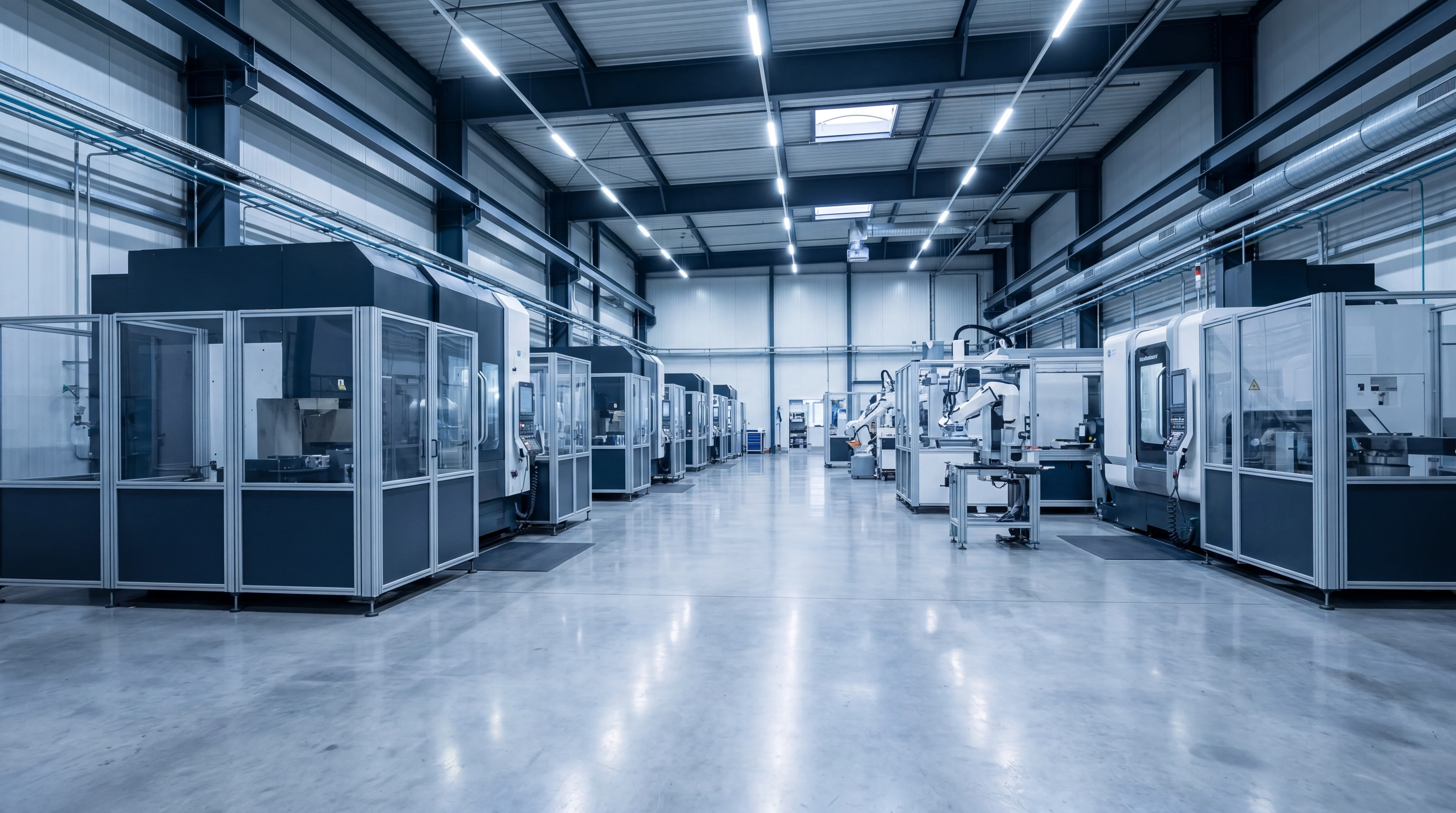
Machine Lapping reference

Machine lapping runs planetary, single-side, and CNC platforms with controlled pressure and abrasive flow. Designed for lot-to-lot consistency in finish and flatness.

Process Overview

Machine Lapping for Madison-area programs is performed under documented process cards. Each lot is recorded with abrasive type and grit, plate selection, pressure profile, and inspection method so a follow-up lot reproduces the same flatness, parallelism, and Ra. Drawings, target finish, and lot size determine the equipment and the sequence; quotes cover all three together.

Single-Side Lapping Machine

Single-Side Lapping Machine is selected based on part size, materials, and target finish. Setup is recorded in the per-lot travel sheet so subsequent lots reproduce the same conditions.

Double-Side Lapping Machine

Double-Side Lapping Machine is selected based on part size, materials, and target finish. Setup is recorded in the per-lot travel sheet so subsequent lots reproduce the same conditions.

Flat Lapping Machine

Flat Lapping Machine is selected based on part size, materials, and target finish. Setup is recorded in the per-lot travel sheet so subsequent lots reproduce the same conditions.

Cylindrical Lapping Machine

Cylindrical Lapping Machine is selected based on part size, materials, and target finish. Setup is recorded in the per-lot travel sheet so subsequent lots reproduce the same conditions.

CNC / Automated Lapping Machine

CNC / Automated Lapping Machine is selected based on part size, materials, and target finish. Setup is recorded in the per-lot travel sheet so subsequent lots reproduce the same conditions.

Lapping Machine Types

Lapping Machine Types is performed under documented process controls aligned with the part geometry, target finish, and lot size. Tolerances, abrasive selection, and plate type are matched to the substrate — cast iron with diamond for hard materials, composite for finer Ra targets, and grooved or serrated plates for chip clearing in higher-removal passes.

  • Single-side lapping machine — open-face plate, single rotating lap for cost-effective single-face finishing
  • Double-side lapping machine — planetary carriers between upper and lower laps for parallel two-face finishing
  • Flat lapping machine — for plates, seals, and flat-faced workpieces
  • Cylindrical lapping machine — internal, external, and centerless configurations for shafts, bores, and pins
  • CNC / automated lapping machine — programmable pressure, speed, and cycle control for repeatable production runs

Additional Equipment and Variants

Other configurations available for machine lapping — expand any item below for selection notes.

Pressure Jet Lapping Machine

Pressure Jet Lapping Machine is selected when part size, materials, or surface finish targets call for that specific platform. Setup is recorded on the per-lot travel sheet so subsequent lots reproduce the same conditions.

Bench-Mounted Lapping Machine

Bench-Mounted Lapping Machine is selected when part size, materials, or surface finish targets call for that specific platform. Setup is recorded on the per-lot travel sheet so subsequent lots reproduce the same conditions.

Free-Standing Lapping Machine

Free-Standing Lapping Machine is selected when part size, materials, or surface finish targets call for that specific platform. Setup is recorded on the per-lot travel sheet so subsequent lots reproduce the same conditions.

Materials and Tolerances

Common materials for machine lapping include hardened tool steels, stainless alloys, tungsten carbide, ceramics (Al₂O₃, ZrO₂, SiC), single-crystal silicon, sapphire, and carbon-graphite seal faces. Flatness targets of one light band (~11.6 µin / 0.3 µm) are routine; sub-micron parallelism is held on planetary fixtures with matched carriers.

Inspection and Certification

In-process inspection uses interferometer plates for flatness, profilometers for Ra, and gauge blocks or air gauges for dimensional checks. Per-lot certification is issued on production runs and ties measured results back to the originating drawing and travel sheet.

Service Detail

In-Depth Reference for Madison

DOC REF: TCS-SVC-LOC

Demand Drivers for Machine Lapping in Dane County's Research and Manufacturing Economy

Dane County's concentration of life sciences instrumentation and precision manufacturing creates sustained demand for surface finishing tolerances that conventional grinding cannot achieve. Promega Corporation, headquartered on the west side of Madison, produces molecular biology reagents and the instruments used to process them - assemblies whose fluid-path components and pump-valve sealing surfaces require flatness specifications measured in fractions of a micrometer. Sub-Zero Group's Madison manufacturing operations present a parallel demand stream: hermetic compressor and valve components in refrigeration systems depend on lapped mating surfaces to maintain long-term seal integrity, and incoming inspection protocols at facilities like these routinely call out flatness acceptance criteria by interferometric light band count rather than by conventional surface-roughness parameters.

University Research Park, situated at the western boundary of the UW-Madison campus along the Mineral Point Road corridor, houses more than 100 technology companies spun from university research in materials science, semiconductor characterization, and advanced diagnostics. Custom vacuum flanges, precision fixture plates, and optical-grade reference surfaces produced for or by these tenants carry surface requirements that reflect laboratory rather than shop-floor standards. The UW-Madison College of Engineering itself operates prototype fabrication facilities where research instruments - interferometers, precision tribometers, and surface characterization rigs - require lapped datum surfaces as measurement baselines.

East Madison's American Center Business Park and the Stoughton Road manufacturing corridor anchor a broader Tier 1 and Tier 2 supply chain serving automotive and heavy-equipment OEMs throughout the upper Midwest. Hydraulic valve bodies, fuel system housings, and precision pump components machined in the Madison metro area frequently carry flatness callouts derived from OEM acceptance standards that specify lapping explicitly - particularly where leakage paths across mating faces must be controlled. Exact Sciences, whose molecular diagnostic platform is regulated as a medical device under FDA oversight, adds additional pull from a supply chain that must document surface-finishing processes and trace measurement results back to accredited calibration sources.

Standards, Traceability, and Acceptance Criteria for Machine Lapping

Calibration of the reference artifacts and measurement instruments central to machine lapping is governed by ISO/IEC 17025, which defines the competence requirements for accredited laboratories performing dimensional and surface-texture calibration. Flatness of lapped surfaces is conventionally expressed in helium light bands - one band equals approximately 0.29 micrometers (11.6 microinches) - measured interferometrically against an optical flat whose calibration certificate must carry an unbroken chain of NIST-traceable length measurements. For gauge blocks and precision reference surfaces, ISO 3650 establishes flatness and parallelism tolerance grades from Grade K laboratory reference through Grade 2 working standard; the corresponding U.S. framework under ASME B89.1.9 defines similar grade structures and requires that the calibrating laboratory hold 17025 accreditation with scope covering the relevant dimensional quantity. Surface plate qualification follows ASME B89.3.7 and Federal Specification GGG-P-463, both of which define flatness grades by repetition-count diagonal measurement methodology and require reference equipment traceable to NIST.

Surface texture parameters on lapped components - Ra, Rz, and Rq in particular - are defined and measured per ASME B46.1, while calibration of the stylus instruments used to acquire those measurements depends on ASTM E2246 sinusoidal roughness specimens whose own calibration must demonstrate NIST traceability. For Madison-area suppliers operating in medical-device supply chains, FDA 21 CFR Part 820 quality system requirements impose documented instrument calibration records and formal acceptance criteria on every measurement tool that contributes to product conformance decisions - which includes the surface-finish gages and optical flats used throughout a lapping operation. Facilities working under both ISO/IEC 17025 and Part 820 simultaneously face the most rigorous documentation burden: calibration intervals, uncertainty budgets, and out-of-tolerance response procedures must satisfy both frameworks, which share underlying traceability logic but differ in how they define corrective-action obligations when reference equipment drifts between scheduled calibration events.

Request a Machine Lapping Quote Call (618) 323-0428