
Hammond, IN · Machine Lapping

Machine Lapping in Hammond

Machine lapping runs planetary, single-side, and CNC platforms with controlled pressure and abrasive flow. Designed for lot-to-lot consistency in finish and flatness.

≤ 1 Light Band < 2 µin Ra ISO 9001:2015 1-Day Quote
Direct line: (618) 323-0428
Request For Quote

Send drawings. Receive tolerances.

One business day turnaround on Hammond machine lapping requests.
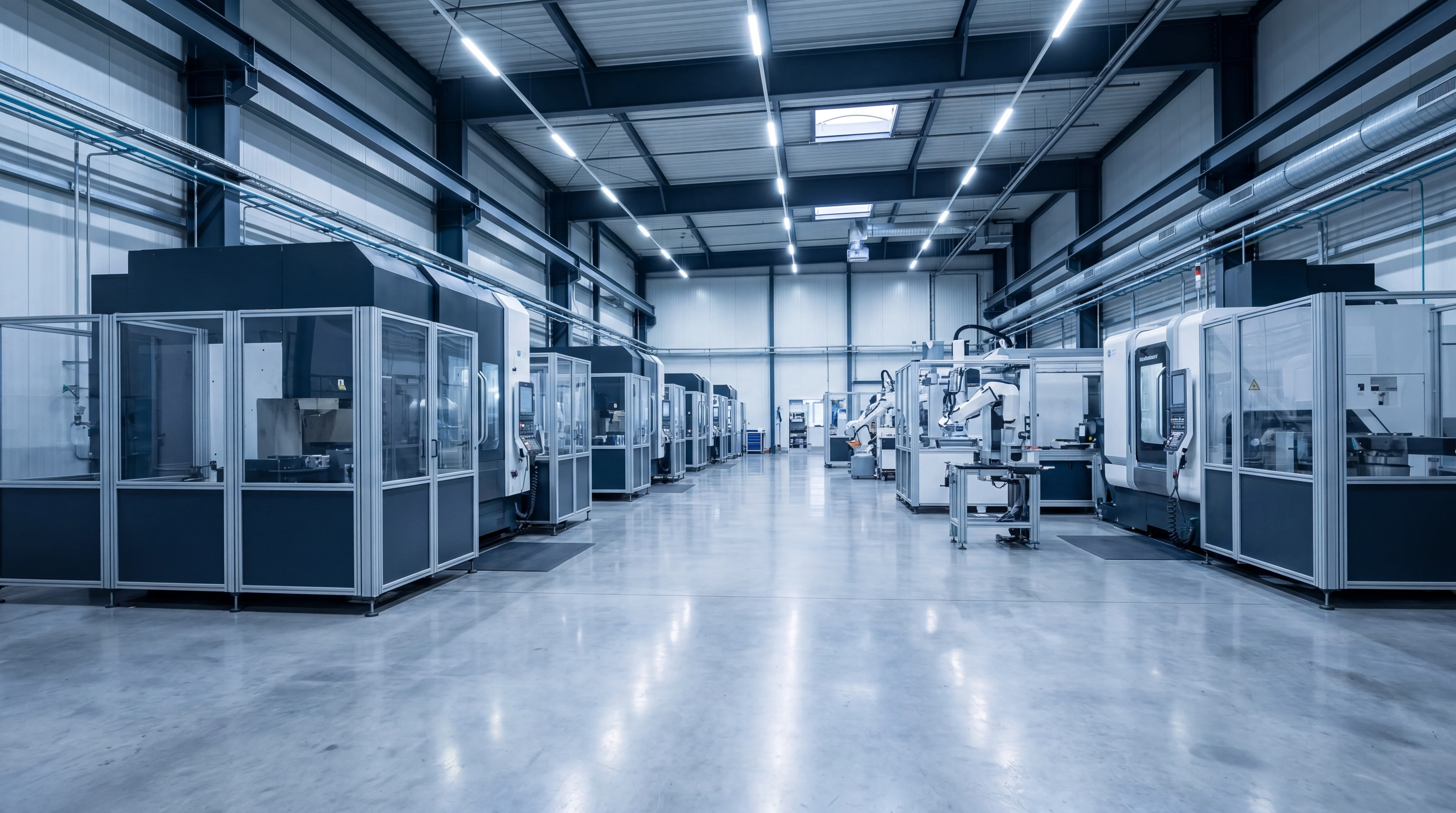
Machine Lapping reference

Machine lapping runs planetary, single-side, and CNC platforms with controlled pressure and abrasive flow. Designed for lot-to-lot consistency in finish and flatness.

Process Overview

Machine Lapping for Hammond-area programs is performed under documented process cards. Each lot is recorded with abrasive type and grit, plate selection, pressure profile, and inspection method so a follow-up lot reproduces the same flatness, parallelism, and Ra. Drawings, target finish, and lot size determine the equipment and the sequence; quotes cover all three together.

Single-Side Lapping Machine

Single-Side Lapping Machine is selected based on part size, materials, and target finish. Setup is recorded in the per-lot travel sheet so subsequent lots reproduce the same conditions.

Double-Side Lapping Machine

Double-Side Lapping Machine is selected based on part size, materials, and target finish. Setup is recorded in the per-lot travel sheet so subsequent lots reproduce the same conditions.

Flat Lapping Machine

Flat Lapping Machine is selected based on part size, materials, and target finish. Setup is recorded in the per-lot travel sheet so subsequent lots reproduce the same conditions.

Cylindrical Lapping Machine

Cylindrical Lapping Machine is selected based on part size, materials, and target finish. Setup is recorded in the per-lot travel sheet so subsequent lots reproduce the same conditions.

CNC / Automated Lapping Machine

CNC / Automated Lapping Machine is selected based on part size, materials, and target finish. Setup is recorded in the per-lot travel sheet so subsequent lots reproduce the same conditions.

Lapping Machine Types

Lapping Machine Types is performed under documented process controls aligned with the part geometry, target finish, and lot size. Tolerances, abrasive selection, and plate type are matched to the substrate — cast iron with diamond for hard materials, composite for finer Ra targets, and grooved or serrated plates for chip clearing in higher-removal passes.

  • Single-side lapping machine — open-face plate, single rotating lap for cost-effective single-face finishing
  • Double-side lapping machine — planetary carriers between upper and lower laps for parallel two-face finishing
  • Flat lapping machine — for plates, seals, and flat-faced workpieces
  • Cylindrical lapping machine — internal, external, and centerless configurations for shafts, bores, and pins
  • CNC / automated lapping machine — programmable pressure, speed, and cycle control for repeatable production runs

Additional Equipment and Variants

Other configurations available for machine lapping — expand any item below for selection notes.

Pressure Jet Lapping Machine

Pressure Jet Lapping Machine is selected when part size, materials, or surface finish targets call for that specific platform. Setup is recorded on the per-lot travel sheet so subsequent lots reproduce the same conditions.

Bench-Mounted Lapping Machine

Bench-Mounted Lapping Machine is selected when part size, materials, or surface finish targets call for that specific platform. Setup is recorded on the per-lot travel sheet so subsequent lots reproduce the same conditions.

Free-Standing Lapping Machine

Free-Standing Lapping Machine is selected when part size, materials, or surface finish targets call for that specific platform. Setup is recorded on the per-lot travel sheet so subsequent lots reproduce the same conditions.

Materials and Tolerances

Common materials for machine lapping include hardened tool steels, stainless alloys, tungsten carbide, ceramics (Al₂O₃, ZrO₂, SiC), single-crystal silicon, sapphire, and carbon-graphite seal faces. Flatness targets of one light band (~11.6 µin / 0.3 µm) are routine; sub-micron parallelism is held on planetary fixtures with matched carriers.

Inspection and Certification

In-process inspection uses interferometer plates for flatness, profilometers for Ra, and gauge blocks or air gauges for dimensional checks. Per-lot certification is issued on production runs and ties measured results back to the originating drawing and travel sheet.

Service Detail

In-Depth Reference for Hammond

DOC REF: TCS-SVC-LOC

Industrial Demand for Machine Lapping in Hammond and the Calumet Region

Hammond occupies the far northwest corner of Indiana, sharing a municipal boundary with Chicago and anchored within the Calumet Region's dense corridor of heavy manufacturing. Lake County's industrial base - built on integrated steelmaking, petroleum refining, and a layered automotive supply chain - generates sustained demand for precision surface-finishing work. Machine lapping, as the controlled-abrasive process capable of holding flatness within tenths of a micrometer and surface roughness below one microinch Ra, appears throughout that base wherever mating surfaces must seal, slide, or register without measurable deviation.

The BP Whiting Refinery, operating immediately east of Hammond in Whiting, Indiana, is one of the largest inland petroleum-refining complexes in the United States. Valve bodies, pump seat faces, and actuator components within that facility require lapped sealing surfaces to maintain integrity under cyclic thermal loading and sustained process pressures; degraded surface finish is a functional failure mode with direct safety implications, not a cosmetic deficiency. At the Indiana Harbor complex in adjacent East Chicago, Cleveland-Cliffs operates blast furnace and flat-rolled steel production that depends on hydraulic press components, roll-gap gauging heads, and dimensional reference surfaces where controlled flatness is a documented quality requirement. Both facilities carry compressed planned-maintenance windows that limit the turnaround time available for surface reconditioning of precision components.

The I-80/94 and I-90 corridors threading through Lake County connect Hammond-area manufacturers to automotive assembly operations throughout the Chicago metro and into Michigan. Tier 1 and Tier 2 suppliers distributed across the Calumet Industrial District and the Wolf Lake industrial zone produce valve train components, sealing rings, and bore reference fixtures that carry flatness and surface-finish specifications derived from assembly tolerances set by OEM engineering teams. Just-in-time delivery structures leave minimal margin for surface irregularities discovered at the point of final assembly, placing upstream accountability squarely on the finishing and certification steps - including lapping and the calibration documentation that supports it.

Standards and Traceability Requirements for Machine Lapping

Machine lapping achieves its results through controlled abrasive action between a precision reference flat and the workpiece, with compound selection calibrated to the target surface finish. Finished surfaces are characterized per ASME B46.1, the governing U.S. standard for surface texture, with Ra, Rz, and Rq parameters documented against workpiece-specific acceptance criteria. For gauge blocks and precision reference flats returned to service after lapping, ISO 3650 defines flatness and parallelism tolerances by grade; Grade 00 permits flatness deviations no greater than 0.05 micrometers across the full gaging face. The domestic complement, ASME B89.1.9, aligns with ISO 3650 and serves as the reference document most commonly cited in NIST-traceable calibration records issued by accredited U.S. metrology laboratories. Workpiece material specifications - governed by ASTM A-series standards for the carbon and alloy steels common in refinery and heavy-industrial applications throughout the region - directly inform the lapping sequence, because steel hardness and grain structure determine appropriate compound grade and the number of conditioning passes required to reach a stable surface.

Calibration records supporting lapped surface documentation must satisfy ISO/IEC 17025, which establishes requirements for measurement uncertainty quantification, equipment calibration intervals, and unbroken NIST-traceable chains back to fundamental length standards. For valve and seat components in petroleum service, API 598 defines shell, seat, and backseat leakage acceptance criteria tied directly to the quality of the lapped sealing interface; a surface that fails the roughness specification also fails the leakage test, creating a hard link between dimensional metrology and process safety compliance. Facilities in Lake County operating under FDA 21 CFR Part 211 - including specialty-chemical and active-pharmaceutical-ingredient processors present in the region - must maintain equipment-qualification records that identify the accreditation scope under which surface-finish measurements were performed. Collectively, these frameworks position machine lapping as a traceable, auditable process step rather than a general shop operation, and they define the documentary record a Hammond-area facility must sustain to satisfy both internal quality programs and external regulatory scrutiny.

Request a Machine Lapping Quote Call (618) 323-0428