
Machine Lapping in Elgin
Machine lapping runs planetary, single-side, and CNC platforms with controlled pressure and abrasive flow. Designed for lot-to-lot consistency in finish and flatness.
Send drawings. Receive tolerances.
One business day turnaround on Elgin machine lapping requests.
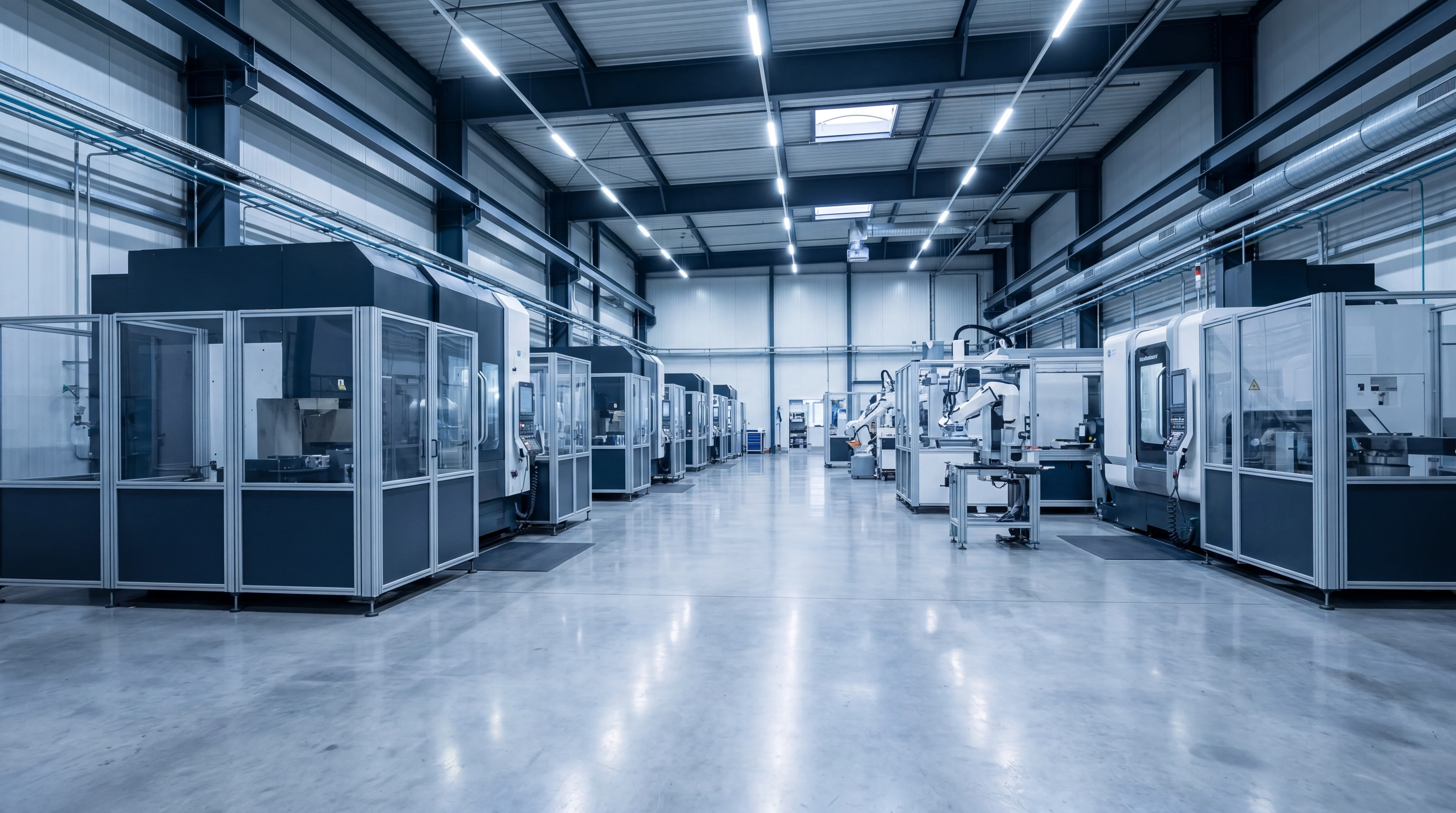
Machine lapping runs planetary, single-side, and CNC platforms with controlled pressure and abrasive flow. Designed for lot-to-lot consistency in finish and flatness.
Process Overview
Machine Lapping for Elgin-area programs is performed under documented process cards. Each lot is recorded with abrasive type and grit, plate selection, pressure profile, and inspection method so a follow-up lot reproduces the same flatness, parallelism, and Ra. Drawings, target finish, and lot size determine the equipment and the sequence; quotes cover all three together.
Single-Side Lapping Machine
Single-Side Lapping Machine is selected based on part size, materials, and target finish. Setup is recorded in the per-lot travel sheet so subsequent lots reproduce the same conditions.
Double-Side Lapping Machine
Double-Side Lapping Machine is selected based on part size, materials, and target finish. Setup is recorded in the per-lot travel sheet so subsequent lots reproduce the same conditions.
Flat Lapping Machine
Flat Lapping Machine is selected based on part size, materials, and target finish. Setup is recorded in the per-lot travel sheet so subsequent lots reproduce the same conditions.
Cylindrical Lapping Machine
Cylindrical Lapping Machine is selected based on part size, materials, and target finish. Setup is recorded in the per-lot travel sheet so subsequent lots reproduce the same conditions.
CNC / Automated Lapping Machine
CNC / Automated Lapping Machine is selected based on part size, materials, and target finish. Setup is recorded in the per-lot travel sheet so subsequent lots reproduce the same conditions.
Lapping Machine Types
Lapping Machine Types is performed under documented process controls aligned with the part geometry, target finish, and lot size. Tolerances, abrasive selection, and plate type are matched to the substrate — cast iron with diamond for hard materials, composite for finer Ra targets, and grooved or serrated plates for chip clearing in higher-removal passes.
- Single-side lapping machine — open-face plate, single rotating lap for cost-effective single-face finishing
- Double-side lapping machine — planetary carriers between upper and lower laps for parallel two-face finishing
- Flat lapping machine — for plates, seals, and flat-faced workpieces
- Cylindrical lapping machine — internal, external, and centerless configurations for shafts, bores, and pins
- CNC / automated lapping machine — programmable pressure, speed, and cycle control for repeatable production runs
Additional Equipment and Variants
Other configurations available for machine lapping — expand any item below for selection notes.
Pressure Jet Lapping Machine
Pressure Jet Lapping Machine is selected when part size, materials, or surface finish targets call for that specific platform. Setup is recorded on the per-lot travel sheet so subsequent lots reproduce the same conditions.
Bench-Mounted Lapping Machine
Bench-Mounted Lapping Machine is selected when part size, materials, or surface finish targets call for that specific platform. Setup is recorded on the per-lot travel sheet so subsequent lots reproduce the same conditions.
Free-Standing Lapping Machine
Free-Standing Lapping Machine is selected when part size, materials, or surface finish targets call for that specific platform. Setup is recorded on the per-lot travel sheet so subsequent lots reproduce the same conditions.
Materials and Tolerances
Common materials for machine lapping include hardened tool steels, stainless alloys, tungsten carbide, ceramics (Al₂O₃, ZrO₂, SiC), single-crystal silicon, sapphire, and carbon-graphite seal faces. Flatness targets of one light band (~11.6 µin / 0.3 µm) are routine; sub-micron parallelism is held on planetary fixtures with matched carriers.
Inspection and Certification
In-process inspection uses interferometer plates for flatness, profilometers for Ra, and gauge blocks or air gauges for dimensional checks. Per-lot certification is issued on production runs and ties measured results back to the originating drawing and travel sheet.
In-Depth Reference for Elgin
Machine Lapping Demand Across Elgin and the Fox River Valley
Kane County's manufacturing corridor carries a precision-work heritage that traces directly to the Elgin National Watch Company, which produced more than sixty million watch movements at its Fox River facility across a century of operation. That legacy established a regional tolerance culture - close fits, verified surfaces, documented traceability - that survives in the current industrial base along the I-90 Jane Addams Tollway corridor and the Randall Road manufacturing spine. Facilities concentrated in Elgin's Big Timber Road and Airport Road industrial zones produce hydraulic valve bodies, pneumatic manifold blocks, and precision bore assemblies where sealing-surface flatness is held to tolerances measured in tenths of a micrometer. Achieving those geometries reliably requires machine lapping rather than grinding or honing alone, and the documentation supporting them must satisfy increasingly strict supplier-qualification audits from primes in aerospace and fluid-power.
The northwest Chicago metropolitan supply chain extends that demand outward. Elgin-area contract manufacturers feed machined components to aerospace and defense integrators concentrated in Addison and Elk Grove Village, where AS9100-certified programs require dimensional and surface-finish traceability records for mating surfaces. Hydraulic and pneumatic OEMs operating in the Fox Valley - running actuator, proportional-valve, and manifold product lines - specify sealing-surface flatness requirements that lapping is the correct process to achieve and post-process calibration the correct method to verify. The presence of several mid-sized precision lapping and grinding job shops across Kane and DeKalb counties reflects sustained production demand, not a specialty edge case, and regional supply chains anchored to the I-90 corridor generate consistent component volume requiring lapping work.
Pharmaceutical and medical device activity in the northwest suburbs adds a distinct regulatory layer. Illinois hosts a substantial cluster of drug-product manufacturers and Class II and Class III device suppliers whose process equipment and component finishing must satisfy federal quality requirements. Valve and fitting surfaces contacting drug products are subject to 21 CFR Part 211 surface-condition requirements, which mandate smooth, cleanable, non-reactive contact surfaces. Device component suppliers operating under 21 CFR Part 820 or the 2024-aligned Quality Management System Regulation face equivalent documentation requirements: any calibration or surface-verification service must be performed by a provider whose traceability is formally established and whose scope of accreditation is auditable by the manufacturer.
Standards and Traceability Requirements for Machine Lapping
Surface texture verification after lapping is governed by ASME B46.1 and ISO 4287, which define the Ra, Rz, and Rq roughness parameters and the profile-filter conventions applied to measured data. The two standards are compatible in their parameter definitions but differ in filter-cutoff conventions; calibration documentation for parts crossing international supply chains must specify which standard governs the callout to avoid ambiguity at receiving inspection. Flatness and dimensional stability of lapped reference surfaces fall under the ASME B89 series, with B89.6.2 establishing the 20 degrees C reference temperature and controlled-humidity environment that dimensional measurements must be performed within to carry valid traceability. NIST traceability for surface texture and flatness measurements runs through artifact calibrations maintained at NIST and transferred through accredited intermediary laboratories; ISO/IEC 17025 accreditation is the formal mechanism that documents that chain, quantifies measurement uncertainty, and makes the calibration certificate auditable by a quality department.
ASTM material specifications for workpiece materials frequently set surface-condition acceptance criteria that interact with lapping process validation. Hydraulic components machined from ASTM A276 stainless steel bar stock or titanium alloys per ASTM B265 may carry surface-roughness or sealing-surface requirements embedded in the material or product specification; the calibration provider must understand which specification governs to confirm that the measurement method and uncertainty are appropriate to the acceptance limit. For gauge blocks and precision reference flats that are themselves lapped to serve as shop standards, ASME B89.1.9 defines grade tolerances from Grade K through Grade AS-2 and the measurement methods required to verify them. Confirming a Grade AS-1 gauge block to specification requires sub-micrometer measurement uncertainty, a figure achievable only within a laboratory environment that meets ISO/IEC 17025 requirements and operates under the environmental controls ASME B89.6.2 specifies. Facilities in Elgin and Kane County submitting components or working standards for lapping-related calibration should verify that the provider's 17025 scope explicitly covers flatness and surface-texture parameters, not merely the broader dimensional calibration category.