
Flat lapping in Racine
Precision flat lapping for Racine-area programs.
Request a quote. Receive tolerances.
One business day turnaround on Racine flat lapping requests.
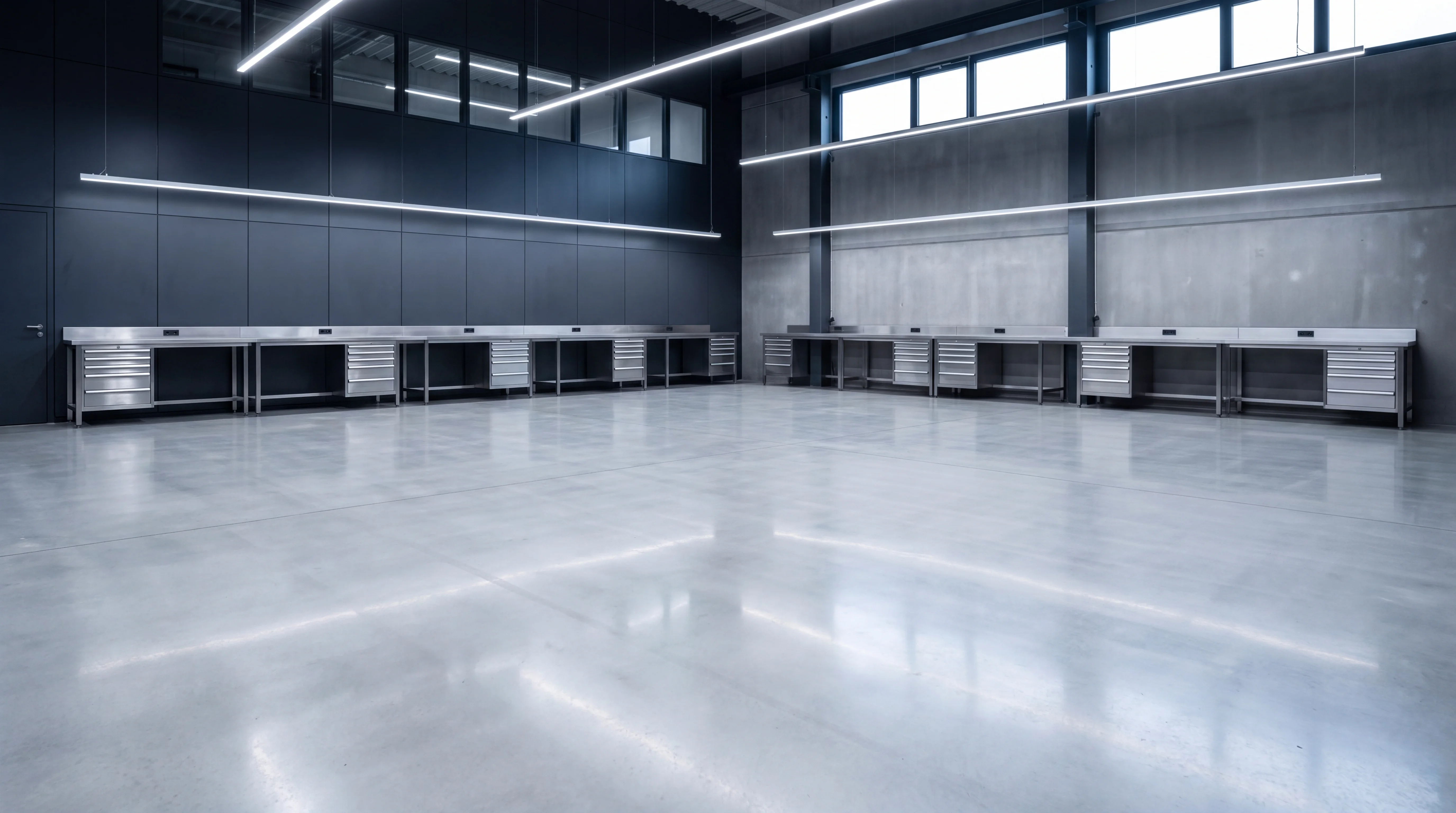
Precision flat lapping for Racine-area programs.
Process Overview
Flat lapping for Racine-area programs is performed under documented process cards. Each lot is recorded with abrasive type and grit, plate selection, pressure profile, and inspection method so a follow-up lot reproduces the same flatness, parallelism, and Ra. Drawings, target finish, and lot size determine the equipment and the sequence; quotes cover all three together.
Equipment and Process Detail
The equipment configurations below cover flat lapping for Racine-area programs. Click any entry to expand the full specifications, controlled parameters, and typical tolerances.
Diamond Flat Lapping Process View specifications
The diamond flat lapping process is a precision abrasive machining technique utilized to achieve extreme flatness, parallelism, and surface finish tolerances on exceptionally hard materials. Unlike conventional lapping using silicon carbide or aluminum oxide, this process employs micron-graded diamond particles suspended in a highly refined slurry or paste. The diamond abrasive is introduced onto a rotating lap plate, which is typically constructed from cast iron, copper, or specialized composite materials. Workpieces are retained within conditioning rings and carriers, while precisely controlled pneumatic or dead-weight pressure is applied. This kinematic motion removes stock at a controlled rate, ensuring minimal sub-surface damage and yielding consistent dimensional geometry across the entire batch. Diamond lapping is frequently specified for processing challenging substrates such as tungsten carbide, technical ceramics, sapphire, and hardened tool steels.
Quality verification of the lapped components is routinely performed using monochromatic light sources and optical flats to measure flatness in helium light bands, targeting tolerances down to 0.000011 inches. Key technical parameters rigorously controlled during the diamond flat lapping sequence include:
- Stock removal rates and abrasive micron size (typically ranging from 0.25 to 15 microns).
- Surface roughness (Ra) targets, measured in accordance with ASME B46.1 standards, frequently achieving finishes below 2 micro-inches.
- Parallelism tolerances held within 0.000050 inches when deployed on double-sided lapping equipment.
- Slurry distribution velocity and component loading pressure to prevent thermal distortion of the substrate.
Conventional (Loose-Abrasive) Flat Lapping View specifications
Conventional loose-abrasive flat lapping is executed by introducing an abrasive slurry between the workpiece and a rotating cast iron or composite lapping plate. Unlike fixed-abrasive methods, this process utilizes rolling, unbonded abrasive particles, typically aluminum oxide, silicon carbide, or diamond, suspended in a liquid vehicle. As the plate rotates, the loose particles roll and slide against the component surface, removing material through microscopic fracturing. This mechanism produces a characteristic non-directional, matte finish while inducing virtually no thermal distortion or residual stress into the substrate. Flatness verification is routinely performed using monochromatic light sources and optical flats, ensuring dimensional conformity to strict engineering tolerances.
Because the abrasive continuously breaks down during the lapping cycle, the cutting action naturally transitions from bulk material removal to fine finishing. The controlled application of slurry allows for precise geometry correction across a broad spectrum of materials, ranging from soft non-ferrous metals to advanced technical ceramics. Key technical parameters controlled through this process include:
- Flatness: Surfaces are commonly held to within one or two lightbands (0.000011 to 0.000023 inches).
- Surface Finish: Roughness averages (Ra) can be refined to low single-digit microinch levels depending on the abrasive micron size.
- Parallelism: Tight parallelism tolerances are generated without the need for mechanical clamping or magnetic chucks.
- Thickness Tolerance: Final dimensional thickness is precisely managed for strict lot-to-lot size uniformity.
Fine / Precision Flat Lapping View specifications
Precision flat lapping is a deterministic subtractive machining process utilized to achieve exceptionally tight dimensional tolerances, superior flatness, and highly specified surface finishes on planar surfaces. The procedure involves introducing a formulated abrasive slurry between a precisely conditioned rotating lap plate and the workpiece, enabling material removal at a microscopic scale. For applications demanding rigorous geometric control, both single-sided and double-sided lapping methodologies are employed to yield flatness tolerances frequently measured in fractions of a helium light band. Parallelism is concurrently refined to sub-micron levels, ensuring uniform thickness across the entire component geometry. Critical specifications and process parameters controlled during fine flat lapping include:
- Surface finish optimization, regularly achieving single-digit micro-inch (Ra) values in alignment with ASME B46.1 surface texture standards.
- Flatness and parallelism verification utilizing optical interferometry or monochromatic light sources coupled with traceable optical flats.
- Calculated stock removal rates optimized for specific substrate materials, ranging from hardened aerospace alloys and technical ceramics to fragile optical glass.
- Kinematic motion control of the carrier systems to ensure uniform abrasive particle distribution and mitigate localized surface anomalies.
Vacuum Chuck Lapping
Vacuum chuck lapping is utilized to process extremely thin, delicate, or non-magnetic components where mechanical clamping would introduce structural distortion or physical damage. By securing the workpiece with uniform atmospheric pressure across a precision-ground porous or channeled ceramic chuck, warp and bow are minimized during material removal. This method is critical for manufacturing semiconductor wafers, optical windows, and advanced ceramic substrates that require exceptional flatness and parallelism. Processing is executed using specialized single-sided lapping equipment, allowing for controlled abrasive slurry distribution and precise pressure application.
pKey technical parameters and standards maintained during vacuum chuck lapping include:- Flatness Control: Workpiece flatness is regularly held within ultra-precise tolerances, often measured in helium light bands or fractions of a micron.
- Surface Finish: Surface texture is controlled in accordance with ASME B46.1 guidelines, achieving sub-nanometer Ra targets depending on material composition.
- Parallelism: Dual-surface coplanarity is maintained by utilizing high-precision reference plates and non-contact metrology.
- Metrology Traceability: Final dimensional verification is performed using interferometry and optical profiling traceable to NIST standards.
- Vacuum chuck lapping — porous ceramic, SiC, hard-coated aluminum, stainless steel, ESC and wafer chucks up to 450 mm
Additional Equipment and Variants
Other configurations available for flat lapping — expand any item below for selection notes.
Coarse Flat Lapping (High Material Removal)
Coarse Flat Lapping (High Material Removal) is selected when part size, materials, or surface finish targets call for that specific platform. Setup is recorded on the per-lot travel sheet so subsequent lots reproduce the same conditions.
Hand Lapping (Manual Flat Lapping)
Hand Lapping (Manual Flat Lapping) is selected when part size, materials, or surface finish targets call for that specific platform. Setup is recorded on the per-lot travel sheet so subsequent lots reproduce the same conditions.
Machine Flat Lapping (Ring Method)
Machine Flat Lapping (Ring Method) is selected when part size, materials, or surface finish targets call for that specific platform. Setup is recorded on the per-lot travel sheet so subsequent lots reproduce the same conditions.
Flat Honing With Super-Abrasive Wheels (FH Series)
Flat Honing With Super-Abrasive Wheels (FH Series) is selected when part size, materials, or surface finish targets call for that specific platform. Setup is recorded on the per-lot travel sheet so subsequent lots reproduce the same conditions.
Cast Iron Flat Lapping Plate
Cast Iron Flat Lapping Plate is selected when part size, materials, or surface finish targets call for that specific platform. Setup is recorded on the per-lot travel sheet so subsequent lots reproduce the same conditions.
Composite Flat Lapping Plate
Composite Flat Lapping Plate is selected when part size, materials, or surface finish targets call for that specific platform. Setup is recorded on the per-lot travel sheet so subsequent lots reproduce the same conditions.
Grooved/Serrated Lapping Plate (Crosscut, Concentric, Spiral)
Grooved/Serrated Lapping Plate (Crosscut, Concentric, Spiral) is selected when part size, materials, or surface finish targets call for that specific platform. Setup is recorded on the per-lot travel sheet so subsequent lots reproduce the same conditions.
Materials and Tolerances
Common materials for flat lapping include hardened tool steels, stainless alloys, tungsten carbide, ceramics (Al₂O₃, ZrO₂, SiC), single-crystal silicon, sapphire, and carbon-graphite seal faces. Flatness targets of one light band (~11.6 µin / 0.3 µm) are routine; sub-micron parallelism is held on planetary fixtures with matched carriers.
Inspection and Certification
In-process inspection uses interferometer plates for flatness, profilometers for Ra, and gauge blocks or air gauges for dimensional checks. Per-lot certification is issued on production runs and ties measured results back to the originating drawing and travel sheet.